


July 01, 2025
Doug Stone
October 15, 2026
,
Editorial Team
Best Dog Food for Allergies: 2026 Vet-Informed Picks
Table of Contents
- How to Compare Dog Food for Allergies Without Wasting Money
- Quick Comparison: Best Dog Food for Allergies
- Common Food Allergens in Dogs: What the Ingredient List Reveals
- Limited Ingredient Dog Food for Allergies: How Fewer Ingredients Help
- The Dog Food Elimination Diet: A Vet-Led Protocol That Actually Diagnoses
- Homemade Dog Food for Dogs with Allergies: When It Works and When It Fails
- Transitioning Foods, Monitoring Symptoms, and When to Call Your Vet
- Conclusion: Matching Your Dog to the Right Allergy-Friendly Food
- Frequently Asked Questions
Last Updated: October 15, 2026
How to Compare Dog Food for Allergies Without Wasting Money
The best dog food for allergies is one built around a single protein source your dog has eaten in the past, without an adverse reaction, paired with a short ingredient list and a complete-and-balanced nutritional profile.
Owners tell us the same story weekly: hundreds of dollars spent on bags that promised relief, because they switched foods without a plan and never isolated the cause.
Here is a framework to use when a dog has an itchy dog and three failed bags of kibble:
- Protein source first. Identify every animal protein in the current food, including treats and table scraps.
- Ingredient count second. Fewer ingredients means fewer variables to rule out.
- Protein novelty third. If the dog has eaten chicken and beef for years, a chicken-based "sensitive skin" formula solves nothing.
The FDA guidance on evaluating pet food labels is worth reading once, because it explains what "complete and balanced" actually requires and what marketing terms like "holistic" do not.
Watch Out The most common mistake we see is switching foods cold turkey during a suspected allergy flare. That triggers digestive upset on top of the original symptoms, and you lose the ability to tell which problem is which. Always transition over 7 to 10 days.
Quick Comparison: Best Dog Food for Allergies
Here are the formulas we recommend most often, matched to the dog in front of us.
| Product | Protein | Price | Best For | Key Detail |
|---|---|---|---|---|
| Earthborn Venture Turkey & Pumpkin | Turkey meal | $23.99 | First-time elimination trials | Grain-free, limited ingredient, probiotics |
| Earthborn Venture Rabbit & Pumpkin | Rabbit meal | $23.99 | Dogs already exposed to poultry | Novel protein, all life stages |
| Earthborn Venture Pollock & Pumpkin | Alaska pollock meal | $23.99 | Fish-based alternative protein | Grain-free, all life stages |
| Open Farm Salmon & Oatmeal Skin & Coat | Wild-caught salmon | $99.99 | Itchy skin and dull coat | Omega fatty acids, biotin, zinc |
| Open Farm Pollock & Oatmeal Digestive Health | Wild Alaskan pollock | $32.99 | Vomiting, loose stool, sensitive stomach | Pre, pro and postbiotics |
| Evanger's Venison & Beef Dinner | Venison, beef | $3.29 | Dogs allergic to fowl | Limited ingredient wet food |
| Evanger's Lamb & Rice Dinner | Lamb | $3.29 | Bland diet support | AAFCO all life stages |
| Wholesomes Sensitive Skin & Stomach Salmon | Salmon | $10.99 | Treats during a food trial | Free of corn, soy, peas |
| Wholesomes Sensitive Skin & Stomach Lamb | Lamb | $10.99 | Treats for sensitive stomachs | Crunchy texture, superfoods |
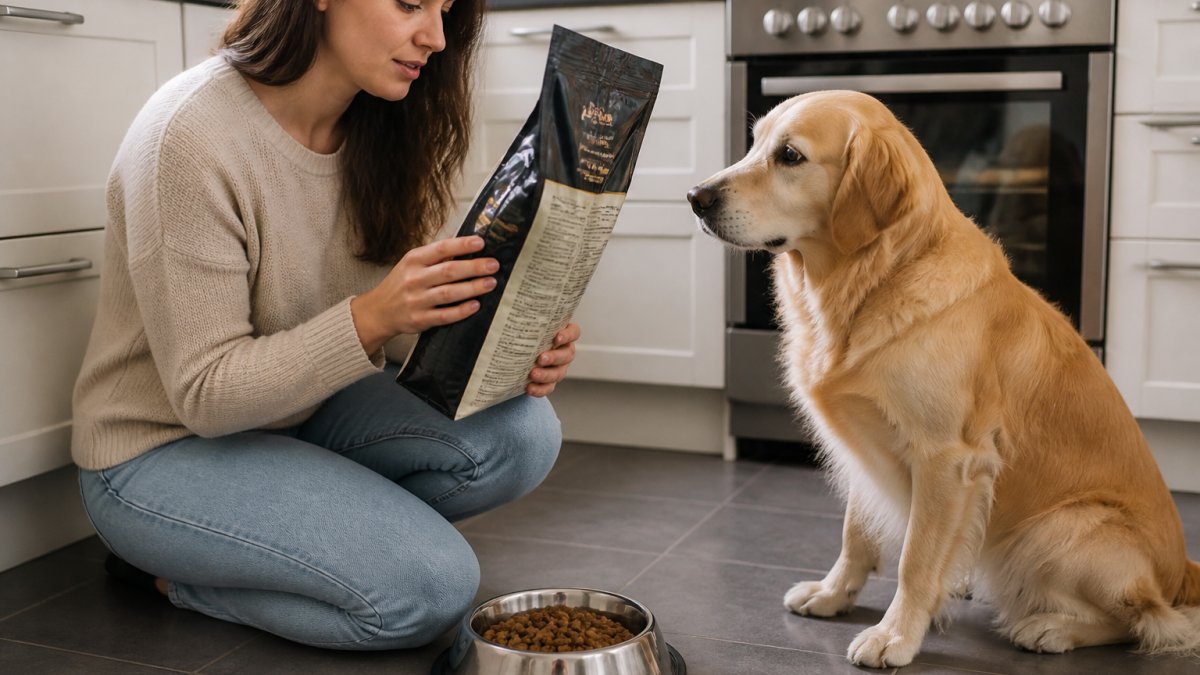
Common Food Allergens in Dogs: What the Ingredient List Reveals
Common food allergens in dogs are overwhelmingly proteins, not grains. Beef, chicken, dairy, wheat, lamb, and soy account for most confirmed cases, which is why "grain-free" alone rarely solves an allergy problem.

Grain-free became a marketing category, and plenty of grain-free foods still contain chicken, beef, or dairy. If your dog reacts to chicken, a grain-free chicken formula changes nothing.
What to look for on the panel:
- Named protein sources. "Poultry meal" is a category, not a protein. "Turkey meal" is specific.
- Split ingredients. Chicken fat, chicken meal, and chicken by-product are all chicken. One allergen, three lines.
- Treats and chews. A dog on a strict turkey diet who gets a beef-flavored chew is not on a strict turkey diet.
Limited Ingredient Dog Food for Allergies: How Fewer Ingredients Help
Limited ingredient dog food for allergies works by shrinking the variables in the bowl. One animal protein and a handful of carbohydrates gives you a realistic chance of identifying what a dog tolerates.
But "limited ingredient" is not a regulated term. No standard sets a maximum ingredient count, and a food can call itself limited-ingredient while listing chicken fat, chicken meal, and chicken by-product on three separate lines, one allergen to your dog, three ingredients to the label.
So read the panel the way a veterinarian does:
- Count animal proteins, not total ingredients. One named animal protein is the goal for a first trial.
- Watch for split proteins. Chicken fat, chicken meal, and chicken by-product are all chicken.
- Check the carbohydrate base. A single novel carb (pumpkin, oatmeal, or potato) keeps the variable count low.
Where limited-ingredient diets work, and where they don't
Limited-ingredient diets work when the suspected trigger is a protein the dog has eaten before and you can swap to a novel one. They fail when a dog has been exposed to most common proteins, because no truly novel protein may be left on a retail shelf.
A common pattern: owners cycle through three or four limited-ingredient bags without a controlled trial. The dog improves for a week, the owner assumes the food worked, symptoms return, and the cycle restarts.
Comparing limited-ingredient products consistently
When you line up two bags, compare them on the same five points every time:
- Protein source and novelty. Has your dog eaten this protein before? If yes, it is not novel.
- Formulation type. Limited-ingredient, novel-protein, or hydrolyzed, these are different tools, not tiers of the same thing.
- Life-stage adequacy. Look for the AAFCO statement: growth, all life stages, or maintenance.
- Veterinary availability. Prescription hydrolyzed diets are sold through veterinarians; retail limited-ingredient diets are not.
- Cost per day, not cost per bag. Divide the bag price by the number of days it actually feeds your dog.
Earthborn Venture Turkey & Pumpkin is a good starting point: turkey meal as the single animal protein, made without grain, gluten, eggs, colorants, fillers, by-products, or artificial flavors, with probiotics and chelated minerals.
For dogs that have eaten poultry for years, Rabbit & Pumpkin swaps in rabbit meal as a novel protein. Pollock & Pumpkin uses Alaska pollock meal and suits all life stages, including puppies.

Pro Tip Check every treat, toothpaste, and supplement against the protein in your trial food. A single beef-flavored dental chew can undo two weeks of careful feeding and leave you blaming the kibble.
The Dog Food Elimination Diet: A Vet-Led Protocol That Actually Diagnoses
A dog food elimination diet is the only reliable way to diagnose a food allergy. Blood, saliva, and hair testing kits sold online have a poor track record, and veterinary dermatologists generally do not rely on them: the immune response involved in food allergy is not reliably reflected in the markers those tests measure.
Itching is also not proof of a food allergy. Environmental allergies, pollen, dust mites, mold, produce nearly identical symptoms, and many dogs have both. Seasonal itching points away from food; year-round itching points toward it, but only a controlled trial confirms.
The protocol, step by step
- Pick one novel or hydrolyzed protein your dog has never eaten. Your veterinarian can help identify what is genuinely novel based on your dog's diet history.
- Feed it exclusively for 8 to 12 weeks. No treats, no table food, no flavored medications, no rawhides, no dental chews, no toothpaste with animal flavoring. Exclusivity is the whole point.
- Log symptoms weekly. Note itching, ear infections, stool quality, vomiting, and coat condition. A written record beats memory.
- If symptoms improve, challenge. Reintroduce the old protein and watch for a return of symptoms. This is the step that proves causation.
- If symptoms return, you have your answer. If they do not, the problem was likely environmental, and the next step is a conversation about allergy management rather than diet.
That challenge phase is the step most owners skip, and the only one that proves anything. Improvement alone can be coincidence, seasonal change, or the placebo effect of a hopeful owner.
Why treats and flavored medications undermine the trial
A food trial is a closed system. Every item that enters your dog's mouth is either part of the trial or an uncontrolled variable. A single beef-flavored heartworm preventive, a peanut butter pill pocket, or a bite of table food can reintroduce the exact protein you are testing against, and you will blame the kibble.
Before you start, inventory everything: treats, chews, dental products, supplements, pill pockets, and flavored medications. Ask your vet whether any can be swapped for an unflavored or alternative version during the trial.
Earthborn Dog Venture Grain Free Turkey & Pumpkin →
When testing is worth it, and when it isn't
Blood, saliva, and hair tests for food allergy are widely marketed but are not the diagnostic standard. Owners commonly arrive with positive results for four or five ingredients, none of which match what the dog actually reacts to in a controlled trial.
The American Veterinary Medical Association guidance on pet nutrition is a good starting point for understanding why your vet's involvement matters here.
When to stop and call your vet
An elimination diet is a diagnostic tool, not a treatment for every case. Stop the trial and call your veterinarian promptly if you see persistent vomiting, bloody diarrhea, sudden swelling of the face or muzzle, difficulty breathing, or hives, not symptoms to monitor at home or solve with a different bag of food.
Key Takeaway The single most useful thing you can do is write down what you fed and what you saw. Twelve weeks of notes beats any allergy test you can buy online.
Homemade Dog Food for Dogs with Allergies: When It Works and When It Fails
Homemade dog food for dogs with allergies can work, but only when a veterinary nutritionist formulates it.
The failure mode is quiet. The World Small Animal Veterinary Association global nutrition guidelines outline the nutrient minimums a recipe has to hit.
Homemade food helps as a short-term elimination trial, under supervision, with a single novel protein and a defined carbohydrate.
For most owners, a limited-ingredient commercial formula plus a novel-protein treat is the practical middle path: repeatable and free of guesswork.
Transitioning Foods, Monitoring Symptoms, and When to Call Your Vet
Transition slowly over 7 to 10 days, mixing increasing amounts of the new food with decreasing amounts of the old, as the Earthborn Venture feeding guidance recommends.

Track these during the trial:
- Itching and scratching, especially at night
- Ear infections and head shaking
- Stool quality and frequency
For itchy skin and a dull coat, Open Farm Salmon & Oatmeal Skin & Coat leads with wild-caught salmon plus salmon oil, flaxseed, biotin, and zinc.
Wet food has a role too. Evanger's Venison & Beef Dinner is a small-batch, limited-ingredient loaf suited to dogs allergic to fowl.
Treats matter more than owners expect.
Conclusion: Matching Your Dog to the Right Allergy-Friendly Food
The hardest part of managing a food allergy is not finding a product.
Our allergy-friendly selection includes limited-ingredient or single-protein recipes, and we carry family-owned and artisanal brands alongside larger names. Our team can discuss ingredient panels with you before you commit to a bag.
Get started with The Family Pet and explore options for a comfortable, itch-free season for your dog.
Frequently Asked Questions
How can I tell whether my dog has a food allergy or an environmental allergy?
Timing and location give the biggest clues. Food allergies usually cause itching year-round, often on the ears, paws, and rear, and frequently come with vomiting or diarrhea. Environmental allergies tend to flare seasonally and concentrate on the face, armpits, and belly. Your vet can help separate the two, and an 8 to 12-week elimination diet is the only reliable way to confirm a food trigger. Blood and saliva tests sold online have not been shown to diagnose food allergies accurately.
How long does a dog need to stay on a dog food elimination diet?
Plan on 8 to 12 weeks of strict feeding with a single novel protein or hydrolyzed protein diet and no other food, treats, table scraps, flavored chews, or supplements. Most dogs with a genuine food allergy improve within 4 to 8 weeks, but a full trial confirms the result. If symptoms fade, your vet may reintroduce the old food to see whether itching returns, which confirms the trigger.
Are limited ingredient dog food formulas effective for allergies?
They can be, when the formula uses a protein your dog has never eaten and keeps the ingredient list short. Limited ingredient dog food for allergies works best as part of a structured trial, not as a random switch. A recipe like Earthborn Venture Rabbit & Pumpkin or Pollock & Pumpkin, both $23.99, uses a single novel animal protein and no grain, gluten, eggs, or by-products, which makes it easier to spot a reaction.
What is the best homemade dog food for dogs with allergies?
Homemade diets can work, but only with veterinary supervision and a recipe balanced to AAFCO nutrient profiles. A typical approach pairs one novel protein with one carbohydrate, such as venison and sweet potato or rabbit and rice, plus a vet-approved vitamin and mineral mix. Unbalanced homemade food causes deficiencies within months, especially in growing puppies, so ask your vet or a board-certified veterinary nutritionist to review the recipe before you commit.
Should I consult a veterinarian before switching my dog to hypoallergenic food?
Yes. Skin allergies, ear infections, and gastrointestinal symptoms like vomiting and diarrhea have many causes, and food is only one of them. A vet can rule out parasites, infections, and environmental triggers first, then guide a food trial with the right protein and duration. Bring the ingredient lists of everything your dog currently eats, including treats and toppers, so the plan covers the full diet.


Leave a comment