


November 10, 2026
Doug Stone
November 12, 2026
,
Doug Stone
How to Spot Signs of Food Allergies in Dogs
Last Updated: November 12, 2026
Quick Summary
Signs of food allergies in dogs usually show up as itching, scratching, red skin, and recurring ear infections, and sometimes as vomiting, diarrhea, or gas. Because these signs look like fleas or environmental allergies, your vet should confirm the cause, often with a strict diet trial.
- Itching that lasts all year, not just in one season, is a common clue.
- Keep a daily log of meals, treats, itching, and stomach trouble to share with your vet.
- Vets usually confirm food allergies with a strict elimination diet trial, not allergy tests.
- A diet trial works only if your dog gets no treats, table scraps, or flavored medications.
- Seek urgent care for facial swelling, trouble breathing, or repeated vomiting.
Is your dog itchy or having tummy trouble?The Family Pet carries limited-ingredient dog foods for sensitive skin and stomachs.
Find Sensitive Dog Food
Table of Contents
- What a Food Allergy Looks Like in Dogs
- Signs of Food Allergies in Dogs: Skin Itching and Irritation
- Signs of Food Allergies in Dogs: Vomiting, Diarrhea and Gas
- Food Allergy or Food Intolerance? How to Tell the Difference
- A Simple Symptom-Tracking Checklist for Your Dog
- How Long Dog Food Allergies Take to Clear Up
- Next Steps: Working With Your Vet on Dog Food Allergy Treatment
- Frequently Asked Questions
What a Food Allergy Looks Like in Dogs
A food allergy happens when your dog's immune system treats a protein in their food as a threat. Their body then reacts with itching, skin irritation, or stomach trouble. Dogs most often react to proteins such as beef, chicken, dairy, wheat, or eggs, though any food can cause a problem.
Here is what makes food allergies tricky: the signs look a lot like other conditions. Fleas, environmental allergies, and stomach bugs can cause the same symptoms. That's why it helps to know what to watch for and to keep track of it. Your vet is the one who can confirm what's really going on.
Many dog parents notice a pattern before they know the cause. Their dog itches more after meals, or the trouble keeps coming back. Those patterns are worth writing down.
Signs of Food Allergies in Dogs: Skin Itching and Irritation
Skin problems are the most common sign of a food allergy in dogs. Your dog may:
- Scratch, lick, or chew at the same spots over and over
- Rub their face on the carpet or furniture
- Develop red skin, bumps, or small scabs
- Have ear infections that keep coming back
- Itch around the paws, face, ears, belly, or rear end
Itching that doesn't go away with the change of seasons is a clue. Environmental allergies often come and go, but food allergies tend to stick around all year.
Don't try to diagnose this on your own. A vet can check your dog's skin and rule out other causes like fleas or mites.
Signs of Food Allergies in Dogs: Vomiting, Diarrhea and Gas
Food allergies can also affect the stomach and intestines. Watch for:
- Vomiting, especially soon after eating
- Loose stools or diarrhea that comes and goes
- Gas and bloating
- A change in appetite or weight loss
One or two upset stomachs don't mean much on their own. But if these signs keep showing up, make a note and tell your vet.
Food Allergy or Food Intolerance? How to Tell the Difference
These two get mixed up all the time, but they're not the same.
- Food allergy: The immune system reacts to a protein in the food. Skin problems are common.
- Food intolerance: The dog's digestive system has trouble handling a food. Stomach symptoms are more typical, and the immune system isn't involved.
Both can make your dog feel miserable, and both are managed with diet changes. The difference matters because it helps your vet choose the right next step.
A Simple Symptom-Tracking Checklist for Your Dog
Keeping a simple log makes your vet visit much more useful. Try a notebook or a notes app, and check off these items each day:

- What did my dog eat today, including treats and table scraps?
- Did my dog itch, lick, or chew? Where?
- Were there any red spots, bumps, or ear smells?
- Did my dog vomit, have diarrhea, or pass gas?
- How was my dog's energy and appetite?
- Did anything change, like a new food, treat, or medicine?
Bring this log to your vet. Even a week or two of notes can point them in the right direction.
How Long Dog Food Allergies Take to Clear Up
There's no single timeline, and that's the part that frustrates a lot of dog parents. Skin signs often take longer to settle than stomach signs. Vomiting, diarrhea, and gas may ease up first, while itching, redness, and ear trouble tend to improve more slowly. Some dogs need a couple of months before their skin looks calm again, and a few need longer.
Here's the catch: those timelines only hold if the trial is truly strict. That's why the day-to-day details matter so much.
What a Diet Trial Actually Looks Like Day to Day
A diet trial means feeding one specific food, usually a novel protein your dog hasn't eaten before, or a hydrolyzed diet where the protein is broken down so the immune system is less likely to recognize it, and feeding nothing else for the full trial period. Your vet sets the length, but many trials run somewhere between eight and twelve weeks.
In practice, strict means:
- No treats unless they're the approved trial diet or your vet clears them.
- No table scraps, no matter how sad the eyes get.
- No flavored medications or chews. Some medications, chews, and pill pockets are flavored with proteins, so check the ingredients. Ask your vet for an unflavored or alternative option.
- No toothpaste, dental chews, or supplements that contain animal protein unless your vet approves them.
- No switching foods mid-trial, even to another limited-ingredient food, without talking to your vet first.
- Managing other pets and kids. A dog on a trial will happily clean another pet's bowl or accept a dropped snack. Keep meals separate and ask everyone in the house to follow the same rules.
Watch out: a single unapproved treat or flavored pill can restart the clock, because symptoms may flare again and you won't know whether the diet is working.
Why Unsupervised Food Switching Backfires
It's tempting to try a new food for a week, see no change, and try another. The problem is that each switch muddies the picture. If your dog improves, you won't know which food did it. If your dog doesn't improve, you won't know whether the food was wrong or whether something sneaked in. A vet-guided trial keeps one variable in play at a time so the result actually means something.
After the Trial: Finding the Trigger
Once symptoms improve, your vet may guide you through reintroducing the old food or individual ingredients to see what triggers a reaction. This step is what turns a successful trial into a long-term plan. Some dogs end up on a lifelong diet that avoids their trigger; others can rotate among several safe foods. Either way, the trial is the map, the long-term diet is the route.
Next Steps: Working With Your Vet on Dog Food Allergy Treatment
Your vet is your best partner here. Bring your symptom log, a list of everything your dog eats (food, treats, chews, supplements, and any flavored medications), and any questions you have. That history is often more useful than any single test.
How Vets Actually Diagnose a Food Allergy
There's no simple blood test that confirms a food allergy. Instead, vets work through a process:
- Rule out the look-alikes. Fleas, mites, skin infections, and environmental allergies can cause the same itching and ear trouble. Your vet may check the skin, look for parasites, or treat an infection first.
- Take a full diet history. They'll want to know every protein your dog has eaten, because a "new" food only helps if the protein is truly new to your dog.
- Run an elimination diet trial. This is the closest thing to a gold standard. Feed a single novel or hydrolyzed diet, strictly, for the set period, and watch for improvement.
- Reintroduce and watch. If symptoms improve on the trial and return when the old food comes back, that's strong evidence of a food allergy.
What About Allergy Tests?
You'll see blood tests, saliva tests, and hair tests marketed for food allergies. Here's the honest picture: most veterinary dermatologists don't rely on these to diagnose food allergies, because results can be unreliable and can point to foods your dog tolerates fine. Blood allergy tests are sometimes used for environmental allergies, but even then they're interpreted alongside history and exam findings, not on their own.
If a test is offered, ask your vet what it's for and how the results would change the plan.
Red Flags That Need Prompt Care
Most food allergy signs are chronic and manageable, but some symptoms need attention right away:
- Severe or repeated vomiting
- Bloody diarrhea, or diarrhea with lethargy
- Facial swelling, hives, or puffiness around the eyes
- Difficulty breathing, wheezing, or collapse
- Refusing food or water for more than a day
Watch out: facial swelling or trouble breathing can signal a serious reaction and shouldn't wait for a routine appointment.
Picking a Food to Try
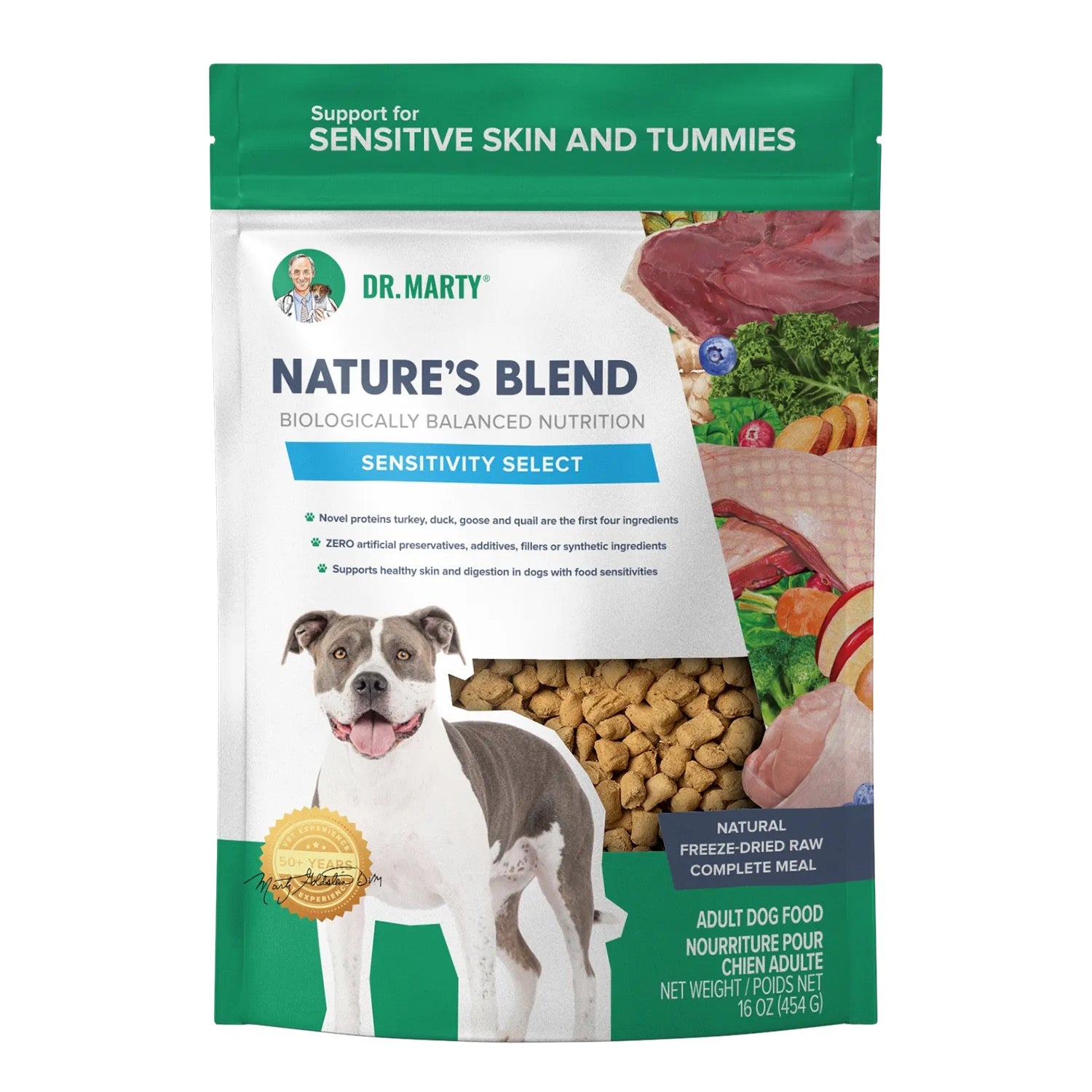
If you're shopping for a food to try, look for limited-ingredient options with a single protein source your dog hasn't had before, or ask your vet about a hydrolyzed diet. Check with your vet first, especially if your dog has other health conditions. At The Family Pet, we carry options made for dogs with sensitive skin and stomachs, such as Dr Marty's Freeze Dried Raw Sensitivity Select Dog Food (https://thefamilypet.store/products/dr-marty-fzdr-senstv-16z, $43.99) and Earthborn Dog Venture Grain Free Rabbit & Pumpkin (https://thefamilypet.store/products/ebrn-d-vnt-gf-rbt-pmpkn-4, $23.99). Talk with your vet to pick one that fits your dog.

Frequently Asked Questions
How can you tell if your dog is allergic to their food?
The most common clues are persistent itching of the paws, ears, face or rear end, plus ear infections that keep coming back. Some dogs also have vomiting, diarrhea or gas. Because these signs overlap with many other conditions, a veterinarian should check your dog before you change its diet. Keeping a simple log of symptoms and meals can make your vet visit much more useful.
What are the most common food allergens for dogs?
Dogs are most often reactive to proteins, with beef, dairy, chicken, wheat and eggs among the frequently mentioned ones. Any protein a dog eats regularly can trigger a reaction, though, so the list varies from dog to dog. Your vet can help you narrow it down through a diet history and a guided elimination diet trial.
Can food allergies in dogs cause itchy skin or ear problems?
Yes. Itchy skin is one of the most common signs of food allergies in dogs, especially around the ears, paws, face and rear end. Repeated scratching, licking or chewing can lead to redness and skin irritation, and ear inflammation or recurring ear infections can follow. Itching that happens year-round, rather than only in certain seasons, is a useful clue to share with your vet.
Can food allergies make dogs vomit or have diarrhea?
They can. Some dogs with food allergies have digestive symptoms such as vomiting, diarrhea, excessive gas or changes in appetite. These signs are not specific to allergies, so they can also point to other problems. If your dog vomits repeatedly, has bloody stool, stops eating or seems very unwell, contact your veterinarian right away rather than waiting to see if it passes.


发表评论