


November 10, 2026
Doug Stone
November 08, 2026
,
Doug Stone
9 Best Small Animal Bedding Options for Healthy Pets
Quick Summary
The best small animal bedding is low-dust, absorbent and unscented paper or kiln-dried aspen that lets your pet burrow and nest. Options like Carefresh and Oxbow Pure Comfort Blend are rated 99.9% dust free, and Carefresh suppresses ammonia odors for up to ten days. Avoid cotton fluff, cedar and printed paper.
- Choose low-dust bedding, since fine dust can irritate tiny airways.
- Carefresh is 2X more absorbent than wood shavings and suppresses ammonia odors for up to ten days.
- Remove soiled spots daily and change the whole bedding at least once a week.
- Never use cotton-like fluff or shredded fabric, as the fibers do not break down.
- When switching bedding, mix old and new over 7 to 10 days to reduce stress.
Table of Contents
- Why the Right Bedding Matters for Your Small Pet's Health
- How We Evaluated Each Bedding Option
- Quick Comparison: Top Small Animal Bedding Options
- Dust-Free Small Animal Bedding: Protecting Little Lungs
- Absorbent Bedding for Small Animals: Keeping Pens Dry and Odor-Free
- Best Bedding for Hamsters and Other Small Pets
- Safe and Unsafe Hamster Bedding: What to Avoid
- Start Your Small Pet's Healthier Habitat Today
- Frequently Asked Questions
9 Best Small Animal Bedding Options for Healthy Pets
Last Updated: November 8, 2026
Why the Right Bedding Matters for Your Small Pet's Health
Choosing bedding for a hamster, guinea pig, rabbit or gerbil affects your pet's breathing, skin, comfort and how often you clean the cage. Think of it as the floor your little friend lives on every day.
Small animal bedding is the material that lines the bottom of a cage, hutch or litter box. A good choice keeps the enclosure dry, controls smells and gives your pet a soft place to burrow and nap.
Here's what many new pet parents don't expect: the wrong bedding can cause problems that are easy to miss.
How We Evaluated Each Bedding Option
Here's what matters most for a small pet's everyday health and comfort:
- Dust level: Low-dust bedding is easier on lungs, especially for pets prone to sneezing.
- Absorbency and odor control: Dry bedding and fewer smells mean a cleaner home.
- Material: Natural, unbleached, dye-free and ink-free materials are a good place to start.
- Burrowing and nesting: Soft, nestable bedding lets your pet dig and build.
- Cost per change: How long a bag lasts matters as much as the sticker price.
Always check the label and talk to your veterinarian if your pet has a health condition.
Quick Comparison: Top Small Animal Bedding Options
| Bedding | Material | Starting Price | Dust Level | Best For |
|---|---|---|---|---|
| Nepco Shredded Aspen (5.0 cu ft) | Aspen shavings | $19.99 | Virtually dust free | Hamsters, guinea pigs, rabbits |
| 30L Carefresh Natural | Reclaimed paper fiber | $19.99 | Virtually dust free | Odor control, daily use |
| 14L Carefresh Natural | Reclaimed paper fiber | $11.99 | Virtually dust free | Smaller setups, trying a new bedding |
| Oxbow Pure Comfort Blend 72L | Pure, never-printed paper | $23.99 | 99.9% dust free | Large enclosures, sensitive noses |
| Oxbow Pure Comfort Blend 36L | Pure, never-printed paper | $14.99 | 99.9% dust free | Mid-size cages |
| Rabbit Hole Hay Natural | Natural food-grade bedding | $28.00 | 99.9% dust free | Absorbency, fewer changes |
| Rabbit Hole Hay White | Food-grade paper pulp | $28.00 | 99.9% dust free | Tidy look, litter boxes |
| Sunseed Natural Corn Cob | 100% USA-grown corn cob | $12.99 | Listed as dust-free | Budget-friendly, small animals and birds |
| Pestell Easy Clean Pine | Kiln-dried Canadian pine | $18.99 | Not stated | Nesting areas, kiln-dried option |
Starting Price
Nepco Shredded Aspen (5.0 cu ft) $19.99
30L Carefresh Natural $19.99
14L Carefresh Natural $11.99
Oxbow Pure Comfort Blend 72L $23.99
Oxbow Pure Comfort Blend 36L $14.99
Rabbit Hole Hay Natural $28.00
Rabbit Hole Hay White $28.00
Sunseed Natural Corn Cob $12.99
Pestell Easy Clean Pine $18.99
Dust-Free Small Animal Bedding: Protecting Little Lungs
If your pet sneezes when you clean the cage, dust is the likely culprit.
The Nepco Shredded Aspen listing describes the bedding as virtually dust free and hypoallergenic for animals with sensitive skin and coats.
The Oxbow Pure Comfort Blend is made from never-printed paper and rated 99.9% dust free.
Watch out: "Dust free" on a label describes the product as sold, not how your pet's cage will look after a week of use.
Absorbent Bedding for Small Animals: Keeping Pens Dry and Odor-Free
Damp bedding is where smells start.
The Carefresh Natural bedding is made from comfyfluff, a reclaimed paper fiber that is biodegradable and compostable.
The Rabbit Hole Hay Natural bedding lists superb absorbency of up to six times its weight, which can mean fewer full bedding changes for busy owners.
The Sunseed Natural Corn Cob bedding is described as ultra-absorbent and biodegradable, with no artificial dyes or additives.
Remove soiled spots daily. Change the whole bedding at least once a week, as the Oxbow and Rabbit Hole Hay directions suggest.
Best Bedding for Hamsters and Other Small Pets
Here's the truth most bedding roundups skip: a hamster, a guinea pig, a rabbit and a gerbil are not interchangeable when it comes to bedding. Their bodies, digging habits and respiratory sensitivities differ, so the best choice for one can be a poor fit for another.
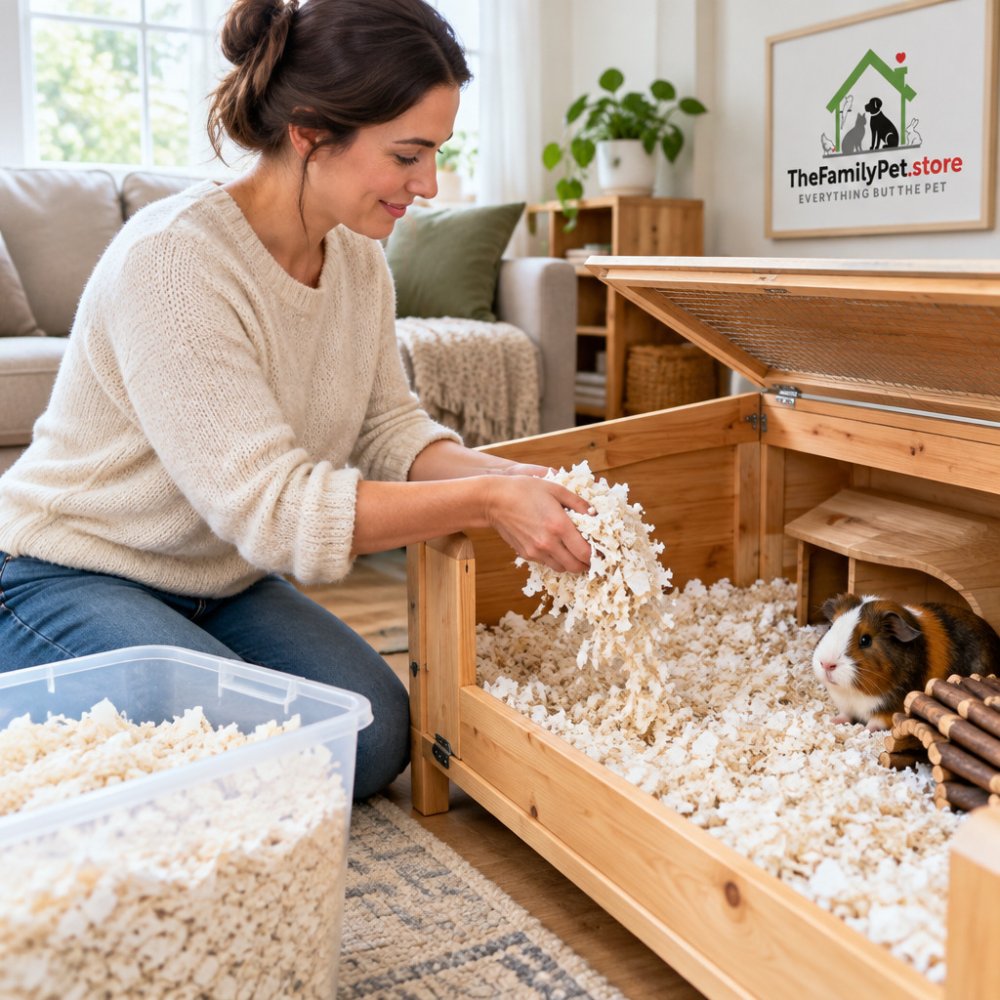
A friendly pet owner gently filling a small wooden hutch with soft, light-colored paper bedding while a guinea pig watches from a nearby corner in a bright living room.
Hamsters
Hamsters are champion burrowers. In the wild they build multi-chamber tunnels, and in a cage they'll try to recreate that. Paper-based bedding that holds its shape when packed is the easiest way to let them do it.
Aim for a deep layer, not a thin sprinkle. Several inches of loose bedding gives most hamsters room to dig and nest.
Watch out: Never use fluffy cotton-like nesting material or shredded fabric with hamsters. Those fibers don't break down and can wrap around a cheek pouch, a leg or the digestive tract. Stick with paper or wood shavings that break apart easily.
Gerbils
Gerbils are desert animals. They drink little, urinate little, and their instinct is to dig deep and build extensive tunnels, so they benefit most from bedding depth. A paper bedding that compacts into stable walls is ideal, and the Oxbow blend's listing for gerbils fits that need. Gerbils also do well with a mix of paper bedding and a small amount of aspen for structure.
Spot-clean regularly and watch for caked areas where tunnels meet the cage floor.
Guinea Pigs
Guinea pigs are grazers, not deep diggers. They need a soft, dry surface to stand and lie on, and they're prone to foot problems if bedding stays damp. The Nepco Shredded Aspen is listed for guinea pigs and rabbits, and its naturalistic texture gives them something to nest in without packing into their coats. Paper bedding like Carefresh is also common because it's soft underfoot.
Low-dust paper bedding is a gentle choice, and heavily scented products are best avoided.
Rabbits
The Pestell Easy Clean Pine listing describes a soft, clean nesting area with kiln-dried pine. Absorbent bedding is useful in a rabbit's litter box area.
Check the corners where your rabbit likes to rest and replace wet spots promptly.
How Age and Health Condition Change the Answer
A young, healthy pet is forgiving. An older pet or one with a health condition is not, and that's where bedding choice becomes a health decision rather than a preference.
- Senior pets: A softer, lower-dust paper bedding is generally easier to walk on than coarse shavings.
- Pets with respiratory signs: If your pet sneezes, wheezes or has discharge from the nose or eyes, talk to your veterinarian. Low-dust bedding such as the Oxbow Pure Comfort Blend or the Rabbit Hole Hay White is rated 99.9% dust free.
Switching Bedding Without Stress
Small pets are creatures of habit, and a sudden change can cause stress or a temporary refusal to nest. The Carefresh listing recommends mixing old and new bedding over 7 to 10 days when switching brands or types. Start with a small proportion of the new bedding and increase it gradually while watching for sneezing, scratching or behavior changes.
Safe and Unsafe Hamster Bedding: What to Avoid
Not every material sold as small animal bedding is a good choice, and the label doesn't always tell you what you need to know. Here's what's generally safe, what deserves caution, and why.
Generally Safer Choices
- Unbleached, unprinted paper pulp. Paper bedding like Carefresh and Oxbow Pure Comfort is soft, absorbent and low-dust when sold as small animal bedding.
- Kiln-dried softwood shavings such as aspen or pine, sold specifically as small animal bedding. Aspen shavings are a natural option for small animals.
- Natural corn cob with no added dyes or additives. The Sunseed listing describes its corn cob as ultra-absorbent and biodegradable with no artificial dyes or additives. It's a budget-friendly option, though it's harder and less nestable than paper or shavings.
- Materials stated as free of harmful chemicals or toxic oils. Check the ingredient or material description on the listing.
Use Caution With
- Cedar and other strongly aromatic woods. Strongly aromatic woods are best avoided by pets with breathing sensitivity.
- Pine that isn't kiln-dried. The Pestell Easy Clean Pine is described as kiln-dried.
- Printed paper, colored bedding or products with dyes. Unprinted, unbleached paper is a simple choice.
- Very fine, dusty materials. If you can see dust drifting when you pour the bedding, your pet is breathing it too. This is especially worth watching with cheap shavings and with any product that's been sitting in a warehouse.
- Scented bedding. Strong fragrances are there for the human nose, not the animal's.
Materials to Avoid Entirely
- Cotton-like fluff and shredded fabric. These fibers may not break down easily in a pet's system. This is a common bedding mistake new owners make because the material looks soft and nest-like.
- Cat litter, clay litter and clumping litter. These aren't made for small pets.
- Newspaper or glossy printed paper as a primary bedding. Plain unprinted paper is a simple alternative to printed paper.
- Soil, sand or grit sold for other purposes. These can be dusty and aren't formulated for small animal enclosures.
How to Tell If Bedding Is Causing a Problem
Bedding problems often show up gradually, so it helps to know what to watch for. Signs that bedding may be irritating your pet include:
- Sneezing, wheezing or a discharge from the nose or eyes, especially soon after a bedding change
- Scratching, hair loss or reddened skin, particularly on the face, paws or belly
- Restlessness or reluctance to burrow in a pet that usually digs
- A strong ammonia smell that returns quickly after cleaning
If you notice any of these, talk to your veterinarian.
A Simple Rule of Thumb
When you're standing in the store or scrolling a listing, ask three questions: Is it low-dust? Is it unscented and undyed? Does it break apart easily so a pet can burrow without fibers wrapping around anything? If the answer to all three is yes, you're likely on safe ground.
Start Your Small Pet's Healthier Habitat Today
Good bedding does a lot of quiet work: it keeps the air cleaner, the floor drier and your pet more comfortable. Start with one of the low-dust, absorbent options above, watch how your pet responds, and adjust from there.
If you have questions about which bedding fits your pet, you can browse our full collection of small animal bedding or read more guides on keeping small pets healthy. For a dust-free option with high absorbency, the Nepco aspen bedding is a solid place to begin.

BUTTON: Shop Small Animal Bedding CARD_TITLE: Which bedding is right for your pet? CARD_TEXT: The Family Pet carries dust-free, absorbent bedding for hamsters, guinea pigs, rabbits and more.
Frequently Asked Questions
What is the best bedding for small animals?
There is no single best option for every pet, but paper-based and aspen bedding are popular choices for good reason. Paper bedding is usually low in dust, highly absorbent and soft enough for burrowing. Aspen shavings are natural, virtually dust-free and hypoallergenic for many pets. Choose based on your pet's species, how much they dig, and how often you can clean. Avoid cedar and pine shavings, which contain oils that can irritate the airways.
Is paper bedding safe for small pets?
Yes, when it is made from pure, unprinted paper pulp and labeled as food grade, paper bedding is generally considered safe for hamsters, guinea pigs, rabbits and gerbils. Look for products with no inks, dyes or chemical fragrances. Because small pets sometimes nibble their bedding, food-grade options give extra peace of mind. Always watch for any sign of irritation or unusual chewing, and check with your veterinarian if you have concerns.
How often should you change small animal bedding?
Spot-clean damp or soiled areas every day, and do a full bedding change about once a week. Some highly absorbent products may last a little longer, while a heavily used litter area may need more frequent attention. A clean habitat helps limit ammonia buildup from urine, which is important for your pet's breathing. When switching to a new bedding, mix old and new over 7 to 10 days so your pet can adjust comfortably.
What bedding should small animals avoid?
Many owners avoid cedar and untreated pine shavings because of their strong aromatic oils. Scented bedding, colored paper and bedding with dyes or chemical additives should also be avoided. Dusty materials can cause sneezing and breathing problems, so skip anything that leaves a lot of fine particles in the air. Choose plain, natural, low-dust materials instead.


Deja un comentario