


October 31, 2026
Doug Stone
November 02, 2026
,
Doug Stone
How to Keep Your Cat Healthy: Simple Tips for Owners
Last Updated: November 2, 2026
Quick Summary
Cat health depends on a few simple habits: yearly vet checkups for adults (twice a year for seniors), a vaccine and parasite-prevention schedule that fits your cat's life stage, a complete and balanced diet measured to avoid extra weight, and daily play and water. Watch for changes in eating, drinking, and litter box habits, since cats hide discomfort well.
- Adult cats should have a checkup at least once a year.
- Senior cats often need checkups about every six months.
- Use parasite prevention every month, year-round, exactly as directed.
- Feed a complete, balanced food for your cat's life stage and measure meals.
- A male cat straining to pee with little or no urine needs emergency care now.
Table of Contents
- Why Cat Health Matters More Than You Think
- Cat Preventive Care: Vet Visits, Vaccines and Parasite Protection
- Cat Nutrition Tips: What to Feed and How Much
- How to Tell If Your Cat Is at a Healthy Weight
- Indoor Cat Exercise and Play Ideas
- Daily Habits: Water, Litter Box and Dental Care
- Spotting Warning Signs and Caring for Your Senior Cat
- Your Next Step: Book a Checkup and Start a Health Routine
- Frequently Asked Questions
Why Cat Health Matters More Than You Think
Cat health is about more than a shiny coat and a happy purr. Cats are good at hiding discomfort, so small problems can grow before you notice them.
Cats are very good at hiding when they feel sick. A cat may stop eating, sleep more, or hide in a closet long before the problem is obvious. That's why checking in with your cat every day matters so much.
- Watch for changes in eating, drinking, and litter box habits
- Notice shifts in energy, sleep, or hiding behavior
- Keep a simple note of anything that seems off
Cat Preventive Care: Vet Visits, Vaccines and Parasite Protection
Catching problems early is one of the best ways to protect your cat, and that starts with a preventive-care routine you can actually follow. Regular vet visits, up-to-date vaccines, and parasite prevention are the foundation of good cat health. The trick is that the right schedule changes as your cat grows, so here is a simple life-stage view you can bring to your vet.
What a routine checkup usually covers
A wellness visit is more than a quick look. Your vet will typically weigh your cat, check their teeth and gums, listen to the heart and lungs, feel the belly and lymph nodes, look at the eyes and ears, and check the skin and coat. They will also ask about appetite, water intake, litter box habits, and behavior, because those everyday details often reveal problems before anything shows on the outside.
A simple preventive-care calendar by life stage
Kittens (birth to about 1 year). Kittens need a series of visits, not just one. Expect checkups every few weeks until the vaccine series is finished, then a visit around the time of spaying or neutering. Your vet will set the vaccine schedule based on your kitten's age and risk, start parasite prevention, and talk about microchipping and dental care habits early.
Adults (about 1 to 7 years). Most healthy adult cats do well with a checkup at least once a year. Your vet will confirm which vaccines are due based on lifestyle and local risk, and you will keep parasite prevention going year-round. This is also the stage to lock in weight checks, dental care, and daily play so small habits do not drift.
Seniors (about 7 years and older). Many vets recommend checkups every six months for older cats, and some suggest basic lab work, such as blood and urine tests, once a year or more often. Cats are good at hiding early kidney, thyroid, and dental problems, and these tests can catch changes before your cat acts sick. Ask your vet what screening makes sense for your cat.
Vaccines and parasite prevention, explained simply
Vaccines teach your cat's immune system to recognize a threat before it arrives.
Parasite prevention works the same way: it is easier to prevent fleas, ticks, and worms than to treat them.
Watch out: never give a cat a parasite product labeled for dogs, and never guess at a dose.
- Schedule a checkup at least once a year for adults, and ask about twice-yearly visits for seniors
- Follow the kitten visit and vaccine series your vet lays out
- Ask which vaccines fit your cat's age, health, and lifestyle
- Use parasite prevention every month, year-round, as directed
- Bring notes on appetite, water, litter habits, and behavior to every visit
Here is a quick view of how the preventive-care schedule changes as your cat gets older.
| Life stage | Checkup frequency | What to focus on |
|---|---|---|
| Kittens (birth to about 1 year) | Every few weeks until the vaccine series is done | Vaccine series, parasite prevention, microchipping |
| Adults (about 1 to 7 years) | At least once a year | Vaccines due, year-round parasite prevention, weight and dental checks |
| Seniors (about 7 years and older) | Often every six months | Blood and urine tests, possibly yearly or more often |
Cat Nutrition Tips: What to Feed and How Much
Good nutrition supports almost everything else on this list. Choose a balanced, complete food that fits your cat's life stage, and follow the feeding guidelines on the package.
Treats count too. They're designed as a daily treat for cats one year or older, and they're made in the USA. Browse hairball control treats

Thinking about a different kind of diet? Learn more about raw diets for cats before you make any changes, and talk with your vet first.
- Feed a complete and balanced food for your cat's life stage
- Measure meals instead of guessing
- Keep treats to a small share of daily calories
How to Tell If Your Cat Is at a Healthy Weight
Many cats are carrying extra weight without anyone noticing. A healthy cat should have a visible waist when you look from above, and you should be able to feel their ribs with light pressure.
Weight changes can also signal health issues, so bring any big changes up with your vet. Healthy weight is a team effort between food, portions, and activity.
Greenies Smartbites Hairball Control Chicken Cat Treats →
- Look for a clear waist when viewed from above
- Feel for ribs with gentle pressure
- Ask your vet to check your cat's weight at each visit
Indoor Cat Exercise and Play Ideas
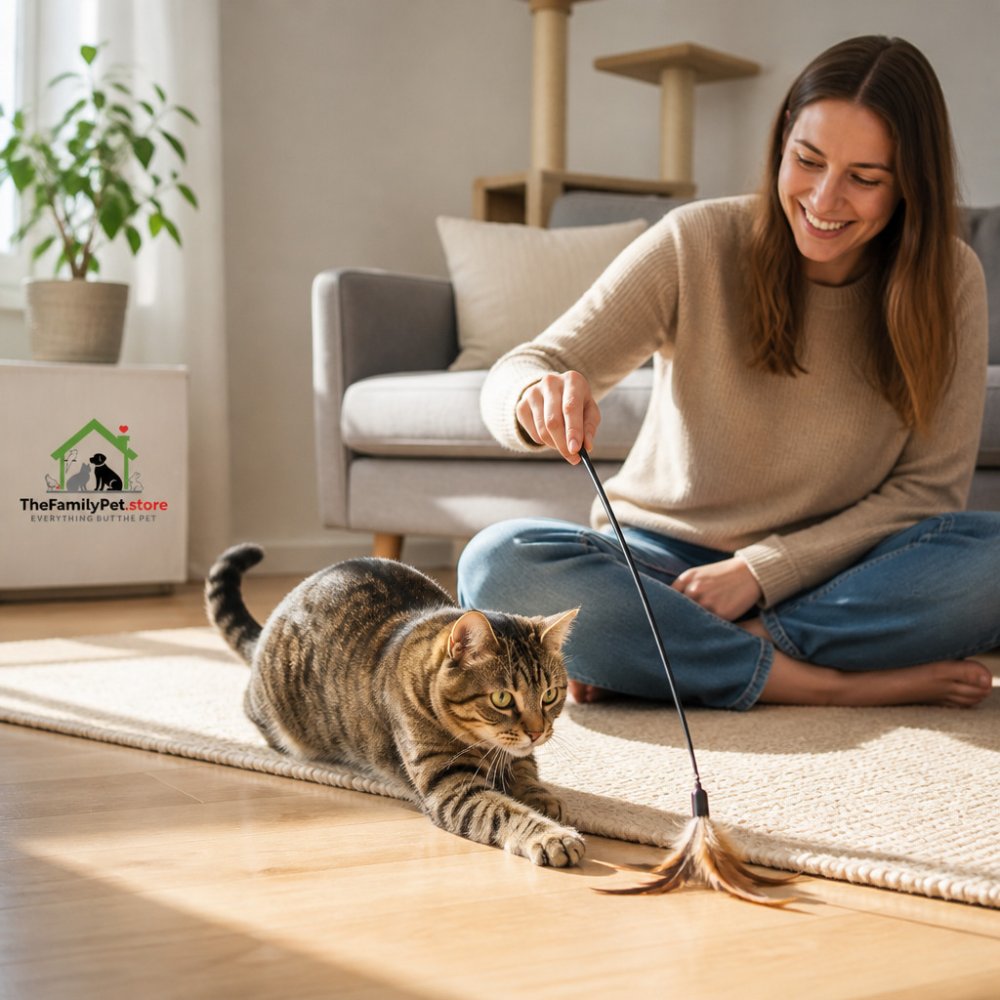
Indoor cats need daily play to stay fit and happy. Short sessions of active play, a few times a day, work well.
A relaxed tabby cat chasing a feather wand across a sunny living room floor is a great picture of healthy play.
- Play with a feather wand for 5 to 10 minutes, twice a day
- Hide treats in a puzzle feeder to encourage hunting behavior
- Rotate toys so they stay interesting
Daily Habits: Water, Litter Box and Dental Care
Small daily habits add up. Make sure fresh water is always available, and place a few water bowls around the house. Cats often prefer moving water, so a fountain may encourage more drinking.
Keep the litter box clean, since a dirty box can lead some cats to avoid it. Many cats need some help with dental care, so ask your vet what works best. See our dental wipes

Wholistic Pet Organics WholeBiotics™ ($24.99) is a probiotic powder with nine strains, made for gut health. Check with your vet before adding any supplement. Explore probiotic supplements

- Keep fresh water in several spots around the house
- Scoop the litter box daily and wash it regularly
- Wipe your cat's teeth several times a week
Spotting Warning Signs and Caring for Your Senior Cat
Cats are masters at hiding discomfort, so the skill that matters most is knowing which changes mean "watch," which mean "call the vet soon," and which mean "go now." Here is a simple triage you can use at home. It is general guidance, not a diagnosis, and your vet always has the final word.
Go now: emergency warning signs
These signs can mean a life-threatening problem. Call your vet or the nearest emergency clinic right away, and do not wait to see if things improve.
- Trouble breathing, open-mouth breathing, or gasping
- Straining to pee with little or no urine, especially in a male cat
- A blocked bladder is an emergency and can become fatal within a day
- Collapse, seizures, or sudden inability to use the back legs
- Repeated vomiting or diarrhea that will not stop
- Suspected poisoning or eating something toxic
- A cat that cannot stand or seems suddenly paralyzed
Watch out: a male cat who keeps visiting the litter box and produces little or no urine needs emergency care immediately, not a wait-and-see approach.
Call for a prompt appointment: signs that need a vet soon
These are not usually emergencies, but they should be checked within a day or two, or sooner if they worsen.
- Not eating for a day or more, or a clear drop in appetite
- Drinking much more water than usual, or urinating more often
- Sudden weight loss or weight gain
- Vomiting or diarrhea that keeps coming back
- New hiding, crankiness, or withdrawal from the family
- Bad breath, drooling, or pawing at the mouth
- A lump, a wound that will not heal, or a change in the eyes or ears
Monitor at home: small changes worth tracking
Some changes are worth writing down and watching for a few days. If they persist or stack up, call your vet.
- A little more sleeping or less interest in play
- Slight changes in grooming or coat condition
- A one-off hairball or a single soft stool
- Small shifts in where your cat likes to hang out
A simple log makes this much easier. Jot down appetite, water intake, litter box habits, weight, and behavior a few times a week. Patterns show up fast, and your vet will thank you for the detail.
Caring for your senior cat
Older cats often need more frequent checkups, and many vets recommend a visit every six months once your cat is around 7 or older. Senior cats are more likely to develop kidney disease, thyroid problems, dental disease, arthritis, and high blood pressure, and early screening can catch these before your cat acts sick. Ask your vet about basic blood and urine tests and blood pressure checks.
At home, make life easier on older joints and senses. Keep food, water, and litter boxes on the same floor so your cat does not have to navigate stairs. Use low-sided litter boxes, add soft bedding in warm spots, and keep night lights on so an older cat can find their way.
- Go now for breathing trouble, straining to pee, collapse, seizures, or suspected poisoning
- Call within a day or two for appetite loss, extra thirst, weight change, or new hiding
- Track appetite, water, litter habits, weight, and behavior in a simple log
- Ask about twice-yearly checkups and screening tests for cats 7 and older
- Keep food, water, and litter boxes easy to reach for older cats
Your Next Step: Book a Checkup and Start a Health Routine
Start small. Pick one habit from this guide, like daily play or a dental wipe, and add another when it feels easy. Your cat will thank you.
Frequently Asked Questions
What are the most important things to keep a cat healthy?
The basics are regular vet checkups, vaccines and parasite prevention, a balanced diet with measured portions, daily play, and fresh water available at all times. Watching your cat's litter box habits, appetite and behavior each day helps you notice small changes early. Most cat health problems are easier and less costly to manage when they are caught early, so a short daily look at your cat goes a long way.
How often should cats have a veterinary checkup?
Many veterinarians recommend a checkup at least once a year for adult cats and more often for kittens, seniors or cats with ongoing health conditions. Your vet can tell you what schedule fits your cat's age and health. Keep up with recommended vaccines and parasite prevention between visits, and bring notes on any changes in eating, drinking or litter box use.
How can I tell if my cat is at a healthy weight?
Gently feel your cat's ribs: you should be able to feel them with light pressure without seeing them clearly. Look at the waist from above, which should be visible behind the ribs, and from the side, where the belly should tuck up slightly. If you are unsure, ask your vet to check your cat's body condition at the next visit.
What should I feed my cat for good health?
Choose a food labeled as complete and balanced for your cat's age, and measure meals rather than free-feeding. Ask your veterinarian before making big changes, especially if your cat has a health condition.
Ready to get started? Browse our range of cat nutrition, supplements, and dental care at The Family Pet, and we'll help you find what fits your cat's needs.


发表评论