


October 23, 2026
Doug Stone
October 25, 2026
,
Doug Stone
7 Steps to Transition Your Dog to New Food
Last Updated: October 25, 2026
Quick Summary
To transition dog food, gradually mix the new food with the old food over seven days, starting with 25% new food on days 1-2, increasing to 50% on days 3-4, 75% on days 5-6, and switching to 100% new food on day 7. This gradual approach gives your dog's digestive system time to adjust to new proteins and fats, reducing the risk of diarrhea, vomiting, or food refusal.
- Start with 25% new food mixed with 75% old food for the first two days.
- Increase the new food ratio by 25% every two days until reaching 100% on day seven.
- Monitor your dog's stool and appetite throughout the transition as your first warning signs.
- Sensitive-stomach dogs need 10-14 days instead of 7, spending 3 days at each ratio.
- Adjust the transition timeline based on food type: kibble-to-kibble takes 7 days, but kibble-to-wet or kibble-to-raw requires 10-14 days.
Table of Contents
- Why a Gradual Transition Matters for Your Dog
- What You'll Need Before You Start
- The 7-Day Dog Food Transition Schedule
- How Long to Transition Dog Food
- Dog Diarrhea After Changing Food: What to Do
- Transitioning Dog Food for Sensitive Stomach
- Common Mistakes to Avoid During Food Transitions
- Start Your Dog's Food Transition Today
- Frequently Asked Questions
Why a Gradual Transition Matters for Your Dog
Switching your dog to a new food too fast during transition dog food is one of the easiest ways to end up with a sick pup.
A gradual transition gives your dog's gut bacteria time to adapt. Think of it like switching your own diet overnight, your stomach would rebel, and your dog's system works the same way.
What You'll Need Before You Start
Before you begin the transition, gather a few simple things:
- Your dog's current food
- The new food you're switching to
- Optional: Fruitables Switch Food Transition Supplement 15oz to support digestive health during the change
The transition supplement uses pumpkin and fiber to buffer the impact of new proteins and fats.

The 7-Day Dog Food Transition Schedule
A seven-day transition is the standard approach for most dogs, enough time to adjust without dragging it out. Here's exactly how to do it:
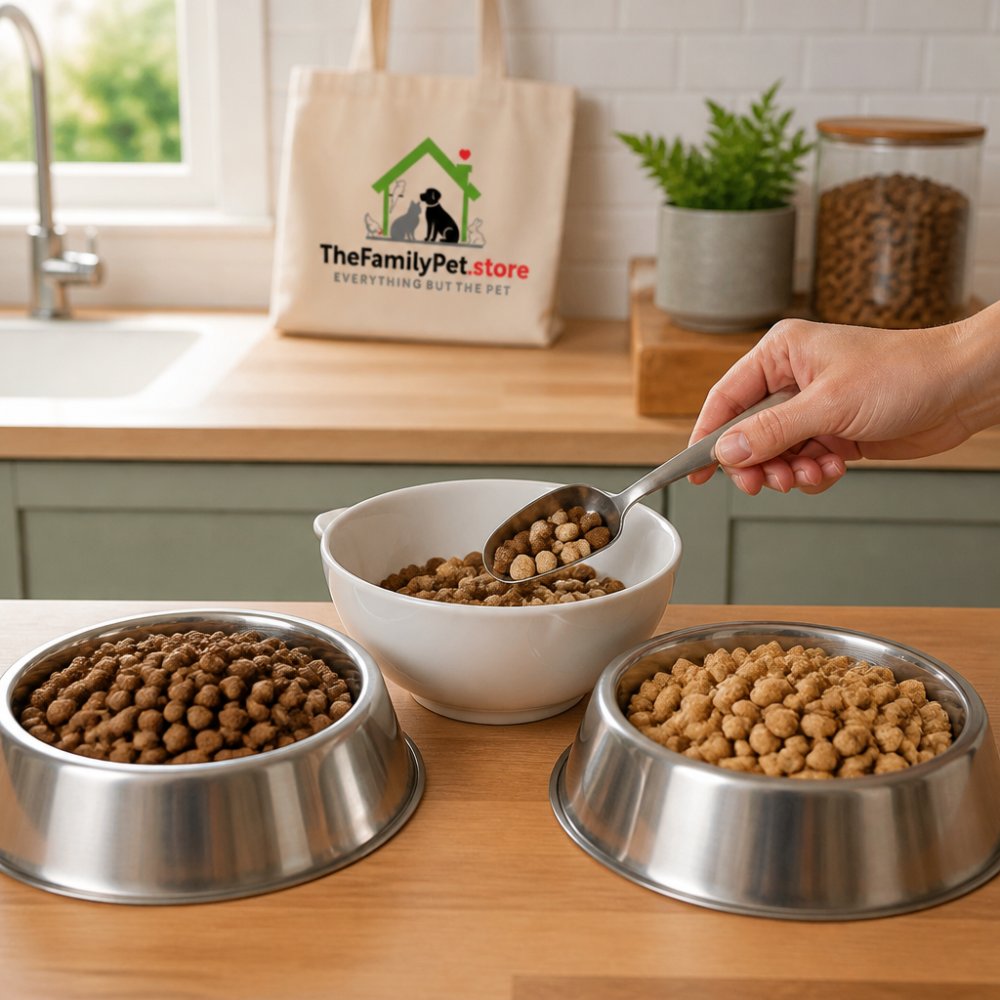
Days 1-2: Start with 25% New Food
On day one, mix about 25% new food with 75% old food. This gentle start lets your dog's digestive system recognize the new ingredients without overwhelming it.
Mix thoroughly so your dog can't pick out just one type. If your dog normally eats one cup, that's about one-quarter cup of new food and three-quarters cup of old food.
Days 3-4: Move to 50% New Food
Now increase the new food to 50%, mix equal parts old and new.
Stir well so your dog gets used to the new taste and texture gradually. If appetite is good and stool is normal, you're on track.
Some dogs show mild stool changes here, often normal. Watch it, but don't panic unless it's severe diarrhea or your dog stops eating.
Days 5-6: Increase to 75% New Food
By day five, mix about 75% new with 25% old.
Their digestive system has had several days to adapt, and most dogs transition smoothly here. Keep monitoring stool and appetite.
Day 7: Complete the Switch
On day seven, feed 100% new food, no more mixing.
Some pet parents keep a little old food mixed in for another day or two to be extra cautious. That's fine, there's no harm in taking it slow.
How Long to Transition Dog Food
Seven days is the default, and for a healthy adult dog moving between similar kibbles, it's usually right. But "how long" really depends on three things: the food type, the new food's calorie density, and your individual dog.
Start with the food type
Not every switch is the same. Use this as a starting point, then adjust for your dog:
- Kibble to kibble (similar protein and fat levels): 7 days is fine. These foods have similar moisture and fiber profiles, so the gut has less to relearn.
- Kibble to wet food (or wet to kibble): Plan on 10-14 days. Wet food is roughly 75-80% water, so the fiber and calorie concentration per bite is very different. Moving too fast often shows up as loose stool simply because the moisture load changed.
- Kibble or wet to raw (or raw to cooked): 10-14 days minimum, and longer for sensitive dogs. Raw diets carry different bacterial and fat profiles, and some dogs need a slower ramp. If your dog is on any medication that suppresses the immune system, talk to your veterinarian before starting a raw transition.
Adjust for calorie density (this is the part most people miss)
Here's a mistake that catches almost everyone: you switch foods, keep scooping the same amount, and your dog either gains weight or acts hungry all the time. A cup of one food isn't a cup of another in calories.
Calorie content is printed on every label as "kcal ME/cup" (for dry food) or "kcal ME/kg" (for wet). To compare:
- Find the kcal/cup on the old food and the new food.
- Multiply your current cups per day by the old food's kcal/cup to get your dog's daily calorie intake.
- Divide that total by the new food's kcal/cup to get the new daily cups.
For example, if your dog eats 2 cups of a 360 kcal/cup food, that's 720 calories a day. If the new food is 420 kcal/cup, feed about 1.7 cups; if it's 300 kcal/cup, feed about 2.4 cups. Do this math before day one and write the new amount on the food bin.
For wet food, the label usually gives kcal per can or per kg, check the can size and do the same division.
Adjust for your dog
- Puppies: Growing puppies have higher calorie needs per pound and more sensitive guts. A 10-day ramp is a reasonable default, and large-breed puppies especially benefit from a slower pace. Ask your veterinarian about the right calorie target for your puppy's age and expected adult size.
- Senior dogs: Older dogs often have slower digestion and may be on other medications. A 10-14 day ramp is common, and any new food should be cleared with your vet if your dog has kidney, heart, or endocrine conditions.
- Dogs with chronic conditions: If your dog has inflammatory bowel disease, pancreatitis history, kidney disease, or a diagnosed food allergy, the transition plan should come from your veterinarian. A generic 7-day schedule is not the right tool here.
The honest answer on timing
If stool stays firm and appetite stays normal, you can usually finish in 7 days. If you see soft stool, gas, or a picky appetite, slow down, there's no prize for finishing on schedule. A smooth 10- or 14-day transition beats a 7-day one that ends in diarrhea and a vet call.
Dog Diarrhea After Changing Food: What to Do
Diarrhea is the most common hiccup during a food transition, and it's usually manageable at home. But "usually" isn't "always," so here's a simple decision tree.
15oz Fruitables Switch Food Transition Supplement →
Step 1: Is your dog acting sick, or just having loose stool?
Acting sick means any of these:
- Vomiting more than once, or vomiting with diarrhea
- Refusing food for more than 24 hours
- Lethargy, weakness, or hiding
If you checked any of those, skip the home-care steps and call your veterinarian or an emergency clinic now. These signs can point to something more serious than a food transition.
Acting normal but with loose stool, bright, alert, eating, drinking, no vomiting, is the common scenario. Keep reading.
Step 2: How loose is it?
- Soft but formed (like soft-serve ice cream): This is mild. Pause the transition where you are, don't advance the ratio, for 2-3 days. If stool firms up, resume advancing one step more slowly than before.
- Pudding-like or watery, but your dog is otherwise fine: Go back to the previous day's ratio (the one before the diarrhea started) and hold there for 3-4 days instead of 2. Then advance in smaller steps, a common pattern is 10% increments rather than 25%.
- Watery with frequency (more than 3-4 times a day) or lasting more than 24-48 hours: Call your veterinarian. Even if your dog seems okay, prolonged diarrhea can dehydrate a dog faster than most people expect, especially puppies and small breeds. Pet Ag Pectillin Diarrhea Medicine can help manage digestive upset during the transition.
Step 3: Support the gut while you wait
A few practical things help while you're holding at a ratio:
- Keep fresh water available at all times. Dehydration is the main risk with diarrhea.
- Don't add new treats, toppers, or table scraps. During a transition, the only variables should be the old food and the new food. Anything else muddies the picture.
- A plain, bland bridge meal can help. A small amount of plain cooked white rice or plain canned pumpkin (not pumpkin pie filling) mixed with the current food for a day or two can settle things. Check with your vet first if your dog has health conditions, and don't use this as a long-term substitute for balanced food.
Step 4: What about food refusal?
A dog that turns their nose up at the new mix is telling you something. Here's how to handle it without creating a picky eater or undermining a prescribed diet:
- Don't free-feed or leave the bowl down all day. Offer the meal at the normal time, give your dog 15-20 minutes, then pick it up. A healthy dog will usually eat at the next meal.
- Warm the food slightly (for wet or mixed food) to boost aroma, most dogs find warm food more appealing. Never microwave in a way that creates hot spots; stir and test with your finger first.
- Don't add extra goodies to bribe them. Toppers and treats during a transition can teach your dog that refusing the plain food gets them something better, and they can also trigger the very upset you're trying to avoid.
A note on suspected food allergies
If you're switching foods because you suspect an allergy (itching, ear infections, recurring GI upset), a casual transition won't tell you much. True diagnosis usually requires a veterinary-supervised elimination trial with a single novel or hydrolyzed protein for 8-12 weeks, with no other foods, treats, or flavored medications. Mixing old and new foods during a trial defeats the purpose.
When in doubt, call
You know your dog best. If something feels off, the diarrhea isn't improving, your dog seems uncomfortable, or you're just not sure, call your veterinarian. There's no such thing as a silly question when it comes to your dog's digestion, and your vet would much rather hear from you early than see your dog after a problem has worsened.
Transitioning Dog Food for Sensitive Stomach
Dogs with sensitive stomachs need extra care during food transitions. If your dog has a history of digestive issues, food allergies, or a sensitive-stomach diagnosis, plan for a longer timeline.
For sensitive stomach dogs:
- Extend the transition to 10-14 days instead of 7.
- Move more slowly through each stage. Spend 3 days at each ratio instead of 2.
- Mix thoroughly to avoid your dog eating chunks of just one food.
Additional support for sensitive stomach transitions:
- Pumpkin-based supplements help buffer new proteins and fats. You can try Science Diet Adult Sensitive Stomach Skin Salmon Vegetable Entree as a gentle food option formulated for digestive sensitivity. The Fruitables Switch Food Transition Supplement is designed for exactly this purpose.
- Digestive enzymes or probiotics can support gut health during the change.
- Keep stress low. A calm dog transitions better than an anxious one.
If your dog's sensitive stomach worsens or doesn't improve after a slow transition, talk to your veterinarian. Sometimes a different food is needed, or your dog might have an underlying condition that needs attention.
Common Mistakes to Avoid During Food Transitions
Even with the best intentions, pet parents sometimes make transitions harder than they need to be. Avoid these mistakes:
Mixing foods unevenly: Your dog shouldn't be able to eat all the old food first and then the new food. Stir thoroughly so every bite is a blend.
Changing too fast: Jumping from old to new in just 2-3 days is asking for trouble. Seven days is the minimum for most dogs. Longer is fine.
Introducing treats or table scraps during transition: New foods during a transition confuse the picture.
Ignoring signs of upset: If your dog has diarrhea, vomiting, or refuses to eat, that's your signal to slow down.
Switching foods too often: Constant food changes stress the digestive system.
Not measuring portions: Eyeballing the mix leads to inconsistent ratios.
Forgetting to monitor stool: Your dog's poop tells you everything. Normal, firm stool means the transition is working.
Start Your Dog's Food Transition Today
Transitioning your dog to new food doesn't have to be stressful. Follow the seven-day schedule, watch your dog's response, and adjust if needed. Most dogs sail through a gradual transition without any problems.
Frequently Asked Questions
Can I mix old and new dog food together?
Yes, mixing is the safest way to transition dog food. Start by replacing about 25% of the old food with the new food, then gradually increase the new food's proportion over 7 days. This helps your dog's digestive system adjust to the new ingredients, proteins, and fats without shock. Mixing thoroughly ensures your dog gets a consistent blend at each meal.
How long should it take to transition a dog to new food?
Most dogs do best with a 7-day transition period. However, dogs with sensitive stomachs or health issues may need 10-14 days. Puppies and senior dogs can also benefit from a slower transition. Watch your dog's stool and appetite during the transition period. If digestive upset occurs, slow down the process by another 2-3 days before increasing the new food percentage again.
What should I do if my dog gets diarrhea after switching food?
Diarrhea during a food transition is common as the digestive system adjusts. Pause the transition for 1-2 days, keeping your dog on the current food ratio. Then resume the transition more slowly, spending 2-3 extra days at each stage. Consider using a digestive supplement like Fruitables Switch to buffer the transition. If diarrhea lasts more than a few days or is severe, contact your veterinarian.
How do I transition my dog to a new food if they have a sensitive stomach?
Dogs with sensitive stomachs need an even slower transition, aim for 10-14 days instead of 7. Increase the new food in smaller increments (10-15% every 2 days rather than 25% daily). Use a digestive support product designed for sensitive stomachs. Monitor stool consistency closely and watch for signs of stomach upset like vomiting, gas, or food refusal. Your veterinarian can recommend the best approach for your dog's specific condition.
A smooth food transition sets your dog up for success with their new nutrition. At The Family Pet, we understand that every dog is different, some need extra support during dietary changes, and that's exactly why we carry transition supplements and digestive aids designed to help. Start your dog's transition today with the right tools and a patient approach.


发表评论