


November 18, 2026
Doug Stone
November 15, 2026
,
Doug Stone
7 Pet Supermarket Alternatives for Natural Pet Nutrition
Quick Summary
Pet supermarket alternatives include big-box pet chains, neighborhood pet stores, online-only retailers, direct-to-consumer fresh food brands, and veterinary clinics. The best choice depends on your pet's health, your need for convenience, and the food format you prefer. Always check that a recipe is complete and balanced for your pet's life stage.
- Big-box chains offer wide selection and curbside pickup, but staff nutrition knowledge varies by store.
- Neighborhood pet stores give advice and specialty diets, though hours and stock can be limited.
- Online retailers offer home delivery and subscription discounts, but you can't inspect a bag before it ships.
- Prescription and therapeutic diets should come from your veterinarian, never from a look-alike store recipe.
- Switch foods gradually over 7 to 10 days, starting with about 25% new food mixed with 75% old.
Table of Contents
- Why Pet Parents Look for Pet Supermarket Alternatives
- What to Look for in a Pet Food Store Alternative
- How to Compare Pet Food Labels Before You Buy
- Comparing Natural Pet Food Options Side by Side
- Choosing Food for Pets with Special Dietary Needs
- Switching Dog or Cat Food Safely
- Ordering Your Next Bag or Pouch from The Family Pet
- Frequently Asked Questions
7 Pet Supermarket Alternatives for Natural Pet Nutrition
Last Updated: November 15, 2026
Why Pet Parents Look for Pet Supermarket Alternatives
Pet Supermarket is a popular stop for many pet parents, but it isn't the only place to find good food.
Maybe your dog has a sensitive tummy and needs a grain-free recipe. Maybe you want a food with a short ingredient list you can actually read.
A little shopping around can help you find food that works better for your dog or cat, and it doesn't have to be complicated.
What to Look for in a Pet Food Store Alternative
Before you pick a store, ask yourself what matters most: price, selection, delivery, and staff knowledge.
- Does it carry natural, high-quality food? Look for recipes with real meat listed first.
- Can you get delivery? Home delivery saves time, especially with heavy bags.
- Is the staff knowledgeable? A quick chat with someone who knows pet nutrition can save you a lot of trial and error.
A good store alternative makes it easy to get the right food, without a lot of guesswork.
How to Compare Pet Food Labels Before You Buy
Pet food labels can look like a foreign language. The good news is that you only need to check a few parts.
Start with the guaranteed analysis. For a plain-language walkthrough of the premium ingredients you'll see on these labels, check out a beginner's guide to premium pet food ingredients.
Then scan the ingredient list. Ingredients are listed by weight before cooking, so the first few tell you what the food is mostly made of.
Finally, check whether the food is designed for your pet's age and size. A puppy, an adult cat, and a senior dog have different needs.
Comparing Natural Pet Food Options Side by Side
Most "alternatives" lists just name a few stores and move on, which isn't very useful when you're deciding where to buy your dog's next bag of food. So let's compare the stores on what actually affects your wallet and your week, then look at a few real recipes from The Family Pet.
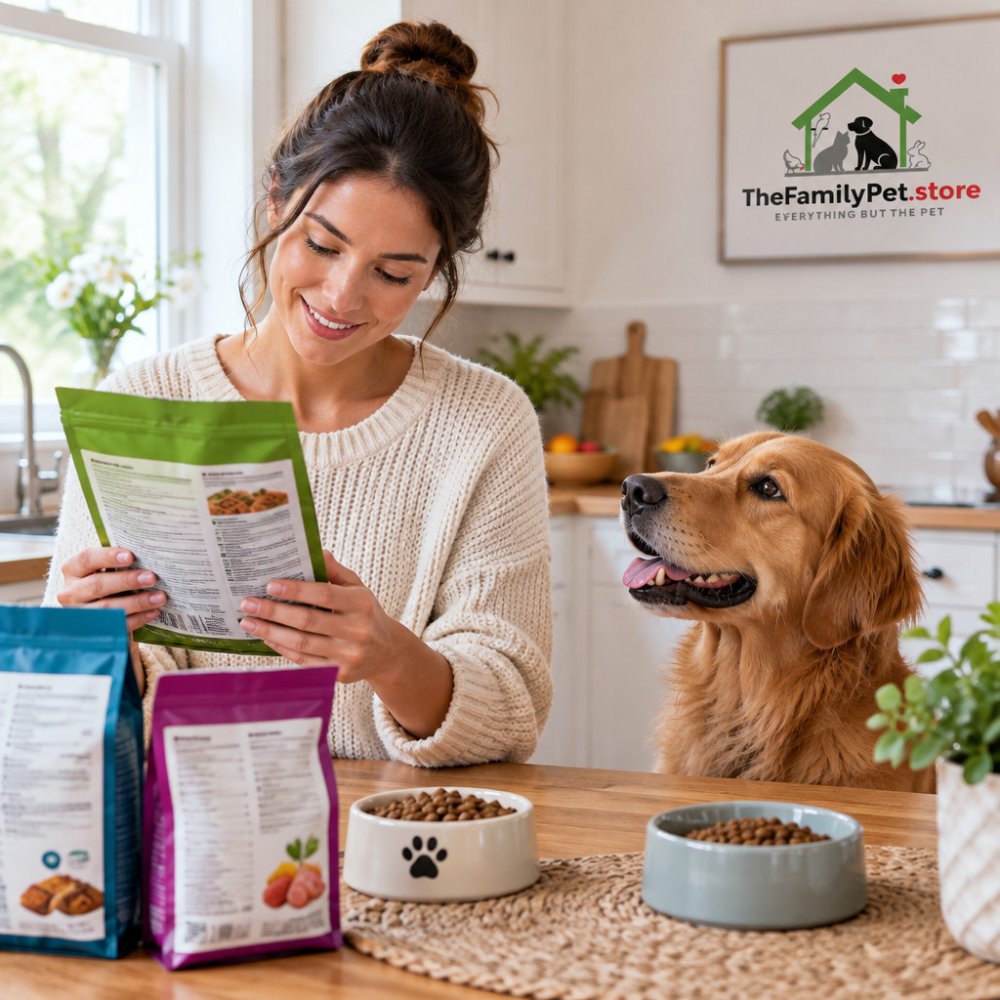
How the store alternatives compare
Here's a plain-English look at the trade-offs between the main types of places pet parents shop for natural nutrition. Find the row that matches your pet, then read across.
| Store type | Best for | Selection strength | Delivery & pickup | Watch-outs |
|---|---|---|---|---|
| Big-box pet chains | One-stop shopping, in-store pickup | Wide, including prescription diets | Curbside pickup common; delivery varies by zip code | Staff nutrition knowledge varies a lot store to store |
| Neighborhood pet stores | Advice and specialty diets | Smaller but curated | Usually in-store only | Limited hours; stock can be inconsistent |
| Online-only retailers | Price comparison and auto-ship | Very wide | Home delivery; subscription discounts common | You can't inspect a bag before it ships; returns take longer |
| Fresh and gently cooked brands sold direct | Refrigerated and shelf-stable meals | Narrow but deep in one format | Delivery, often on a set schedule | Refrigerated items need fridge or freezer space |
| Veterinary clinics | Prescription and therapeutic diets | Narrow to medical needs | Pickup at the clinic | Requires an exam and a prescription |
A quick way to use this: if your pet is healthy and you mainly want convenience, an online retailer or a big-box chain with delivery fits. If your pet has a medical condition, the clinic row is the one that matters.
Matching the store to your pet and diet
- Dogs on a routine diet: prioritize stores with consistent stock of the same recipe, so you're not forced into a sudden switch.
- Cats: selection thins out fast, especially in fresh and gently cooked formats. Confirm the store stocks cat recipes, not just dog.
- Prescription or therapeutic diets: these should come from your veterinarian or a retailer that verifies the prescription. Don't substitute on your own.
A real side-by-side of recipes from The Family Pet
Once you've picked the store type, the product comparison gets easier. Here's how a few options from The Family Pet stack up.
| Product | Format | Starting Price | Protein Source | Best For |
|---|---|---|---|---|
| Nulo Gently Cooked Lamb & Apple (9 oz) | Shelf-stable pouch | $6.69 | Lamb, tuna | Trying a gently cooked meal |
| Freshpet Vital Chicken, Beef & Salmon (1.75 lb) | Fresh refrigerated | $25.99 | Chicken, beef, salmon | Variety in protein |
| Freshpet Vital Turkey (2 lb) | Fresh refrigerated | $24.99 | Turkey | Dogs needing a single protein |
| Freshpet Vital Chicken (2 lb) | Fresh refrigerated | $25.99 | Chicken | Dogs with a chicken-based routine |
| Freshpet Vital Beef & Bison | Fresh refrigerated | $15.99 | Beef, bison | Dogs who prefer red meat |
Starting Price
Nulo Gently Cooked Lamb & Apple (9 oz) $6.69
Freshpet Vital Chicken, Beef & Salmon (1.75 lb) $25.99
Freshpet Vital Turkey (2 lb) $24.99
Freshpet Vital Chicken (2 lb) $25.99
Freshpet Vital Beef & Bison $15.99
Grain-Free Fresh Dog Food Options
Several Freshpet Vital recipes are grain-free. The Turkey, Chicken, and Beef & Bison recipes are built around meat and include vegetables like spinach, pumpkin, and cranberries. The Chicken, Beef & Salmon recipe includes salmon, and its listing notes omega fatty acids in salmon.
Pros:
- Meat-forward ingredient lists
- Developed by vet nutritionists
- No artificial preservatives, colors, flavors, or additives
Cons:
- Refrigerated, so you'll need freezer or fridge space
- Costs more per meal than dry kibble
Gently Cooked Meals for Convenient Feeding
The Nulo Gently Cooked Meals pouch takes a different approach. It's a shelf-stable, ready-to-serve meal. Lamb is the main protein, cooked with diced sweet potatoes, apples, green beans, and carrots in a savory bone broth.
Pros:
- No refrigeration needed before opening
- Easy to take along on trips
- Ingredients you can recognize
Cons:
- Single-serve pouches can add up for bigger dogs
- Works best as a full meal or as a mix-in, not a complete replacement for every dog
The total cost picture, not just the sticker price
A bag of food is only part of what you pay. When you compare stores, add up the recurring costs: delivery fees, subscription or auto-ship charges, and whether smaller bags cost more per pound. A store with a lower sticker price but a delivery fee on every order can cost more over a month than one with a slightly higher price and free pickup.
Choosing Food for Pets with Special Dietary Needs
Pets with allergies, sensitive stomachs, or a diagnosed health condition need more care than a healthy pet does. A store alternative can help you find the right recipe, but a wrong swap can hurt your pet. Let's walk through it slowly.
When a substitute is safe, and when it isn't
A store-bought recipe can be a reasonable alternative when your pet is healthy and you're simply changing brands or formats. It is not a safe substitute when your veterinarian has placed your pet on a prescription or therapeutic diet for a diagnosed condition, kidney disease, urinary issues, heart conditions, or food allergies confirmed by a vet.
Watch out: never swap a prescription diet for an over-the-counter food on your own, even if the ingredient list looks similar. Ask your vet first.
How to verify a diet is complete and balanced
This is the check most shoppers skip, and it's the one that matters most. Look on the label for a statement that the food is "complete and balanced" for a specific life stage (growth, adult maintenance, or all life stages). That statement means the recipe is formulated to meet recognized nutrient profiles. In the U.S., those profiles are set by the Association of American Feed Control Officials (AAFCO), and you can read more through AAFCO nutrient profiles for dog and cat food.
A few practical checks:
- Life stage match: a puppy or kitten food is not a substitute for adult maintenance, and the reverse is also true.
- The word "complete": treats, toppers, and mix-ins are often labeled "for intermittent or supplemental feeding only", that means they are not a full diet.
- The manufacturer's nutrition contact: a reputable brand will tell you who formulated the food and whether it was tested by feeding trials or formulated to meet the profile.
Single-protein and limited-ingredient diets
For a pet with a suspected protein sensitivity, a single-protein recipe is often the easiest place to start. You can also browse vet-informed picks of dog food for allergies to see recipes built for sensitive dogs. The Turkey and Chicken recipes from Freshpet Vital, for example, each list one main animal protein. Keep a simple log of what your pet eats and how their stomach and skin respond, the date, the recipe, and any changes.
Working with your veterinarian on a change
Bring the log and the label of the food you're considering to your appointment. Ask three questions: Is this recipe appropriate for my pet's condition? Is it complete and balanced for my pet's life stage? And how slowly should I transition? If your pet is on a prescription diet, ask whether the clinic can approve a refill through a retailer you prefer.
A simple decision path
- Healthy pet, no diagnosis: choose a complete-and-balanced recipe for the right life stage, then transition slowly.
- Sensitive stomach or suspected allergy: start with a single-protein or limited-ingredient recipe, keep a log, and check with your vet if symptoms continue.
- Diagnosed condition or prescription diet: talk to your vet before changing anything, and use a retailer that verifies prescriptions if your clinic allows it.
That's the whole idea: a store alternative can make feeding easier, but your vet stays in charge of the medical decisions.
Switching Dog or Cat Food Safely
Changing food too fast is one of the most common reasons for an upset stomach. A gradual switch gives your pet's digestive system time to adjust.
A typical transition takes about 7 to 10 days:
- Days 1-2: Mix about 25% new food with 75% old food.
- Days 3-4: Move to a 50/50 mix.
- Days 5-6: Use 75% new food and 25% old food.
- Days 7-10: Feed only the new food.
Keep an eye on stool quality, appetite, and energy. If your pet has diarrhea, vomiting, or refuses to eat, check with your veterinarian. Some pets need a slower switch, and that's perfectly fine.
Ordering Your Next Bag or Pouch from The Family Pet
When you're ready to order, The Family Pet makes it simple to shop the brands covered above.
Ordering online is a good option if you want to avoid heavy lifting and extra trips.
BUTTON: Shop Natural Pet Food Today CARD_TITLE: Finding the right food for your pet? CARD_TEXT: The Family Pet helps pet parents find natural, high-quality food with convenient delivery.
Frequently Asked Questions
What should I look for on a dog or cat food label?
Start with the guaranteed analysis, which lists minimum protein and fat and maximum fiber and moisture. Next, check the ingredient list: ingredients are listed by weight, so a named meat near the top is a good sign. Look for a statement saying the food is complete and balanced for your pet's life stage, which is based on AAFCO nutrient profiles. Don't worry if some words feel unfamiliar; you can always ask a team member to walk you through the label.
Is grocery-store pet food a healthy option for dogs and cats?
Some grocery-store foods are complete and balanced, but quality varies a lot from brand to brand. The easiest way to check is to look for a complete and balanced statement on the label and confirm it matches your pet's life stage. Compare the guaranteed analysis and ingredient list the same way you would for any other food. If you're unsure, ask your veterinarian which types of food suit your pet best.
Can I switch my dog or cat to a different food right away?
Most pets do better with a gradual switch over about 7 to 10 days. Start by mixing a small amount of the new food into the old, then slowly increase the new food while cutting back the old. If your pet develops vomiting, diarrhea, or refuses to eat, pause the switch and check in with your veterinarian. A slow change helps your pet's stomach adjust and makes mealtime less stressful for everyone.
How do I choose a food for a pet with specific dietary needs?
Start with your veterinarian, especially if your pet has a health condition, allergies, or a sensitive stomach. Ask whether a prescription or therapeutic diet is needed, and whether an over-the-counter food with a limited ingredient list might work. Bring the current labels of foods you're considering so your vet can review them. Our team can also help you narrow down options that match the guidance your vet gives you.


Leave a comment